Physiological Recovery Strategies: A Methodological Framework for Elite Performance

True physiological restoration isn't a byproduct of inactivity; it's a calculated logistical requirement that dictates the ceiling of human performance. Most elite performers recognize that training intensity is only half of the equation, yet many encounter performance plateaus when their physiological recovery strategies lack the necessary scientific rigor. You likely understand that traditional rest often fails to address the underlying metabolic and systemic fatigue that accumulates during high-stress protocols.
This article provides the methodology required to master these restoration principles, moving beyond superficial relaxation into a structured framework of biological maintenance. You'll gain the precision necessary to maintain peak performance integrity through disciplined logistical management and professional oversight. We'll examine the core mechanisms of systemic repair and the logistical hurdles of protocol execution to ensure every action yields a measurable return. By shifting from a passive mindset to a methodological discipline, you can ensure your biology remains prepared for the unrelenting demands of elite competition.
Table of Contents
Defining Physiological Recovery Strategies: Beyond Passive Rest
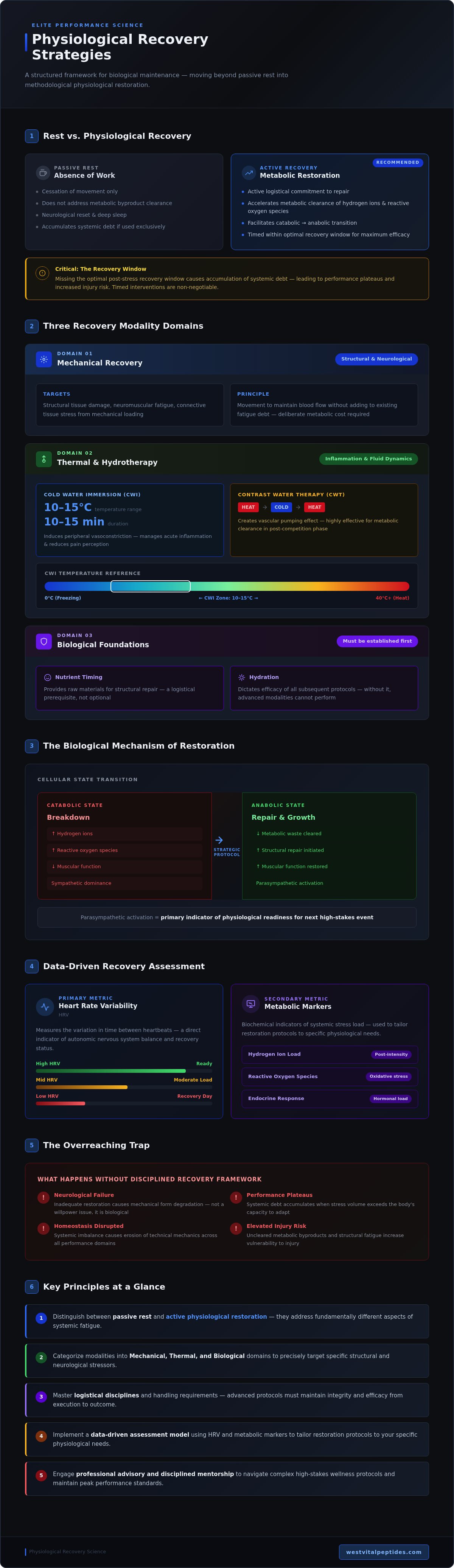
Elite performance is not a product of effort alone but a result of how effectively one manages the systemic stress that follows it. Many professionals conflate the cessation of movement with the restoration of function, yet there's a profound difference between simple rest and the execution of physiological recovery strategies. Rest is a passive state characterized by the absence of work; physiological recovery is an active, logistical commitment to metabolic and structural repair.
For the dedicated athlete or professional, the recovery window functions as a logistical deadline. This period represents the optimal timeframe in which the body is most receptive to restoration protocols. If you miss this window, you risk accumulating systemic debt that leads to performance plateaus and increased injury risk. A methodological approach ensures that every intervention is timed for maximum efficacy, preserving the integrity of your training cycle over the long term.
The Biological Mechanism of Restoration
At the cellular level, restoration begins with metabolic clearance. High-intensity stressors produce a cascade of byproducts, including hydrogen ions and reactive oxygen species, which impede muscular function. Strategic recovery interventions accelerate the removal of these wastes, reducing systemic fatigue more rapidly than passive waiting. This process is deeply intertwined with the endocrine system's response to stress. By utilizing professional advice to implement specific protocols, you can facilitate the transition from a catabolic state of breakdown to an anabolic state of repair. This shift is essential for parasympathetic activation, which serves as the primary indicator of physiological readiness for the next high-stakes event.
Homeostasis and Performance Integrity
The primary goal of any recovery framework is the maintenance of homeostasis. When systemic balance is compromised, technical mechanics begin to degrade. This erosion of form isn't just a matter of willpower; it's a neurological failure caused by inadequate restoration. Maintaining protocol integrity is the only way to avoid the trap of overreaching, where the volume of stress exceeds the body's capacity to adapt. Without a disciplined framework, the quality of your output will inevitably suffer as your mechanics fail to meet the demands of your ambition. Physiological recovery is a disciplined logistical process for maintaining systemic balance.
Categorizing Recovery Modalities: Mechanical, Thermal, and Biological
To optimize systemic restoration, you must categorize physiological recovery strategies into distinct mechanical, thermal, and biological domains. This taxonomy allows for the precise application of interventions based on the specific type of stressor encountered during high-intensity training. Effective restoration isn't a monolith. It's a calculated selection of tools designed to address specific physiological deficits. Before implementing advanced modalities, you must establish biological foundations. Nutrient timing and hydration aren't merely suggestions; they're foundational logistics that dictate the efficacy of all subsequent protocols. Without these prerequisites, the body lacks the raw materials required for structural repair.
The distinction between active and passive recovery is equally critical. Passive recovery involves complete cessation of activity, which is necessary for neurological reset and sleep. Active recovery, however, requires a deliberate metabolic cost. The goal is to maintain enough movement to facilitate blood flow without adding to the existing fatigue debt. Precision in this balance is what separates elite methodology from generic rest. Managing these variables often requires professional advice to maintain protocol integrity and ensure your efforts translate into measurable readiness.
Thermal and Hydrotherapy Protocols
Thermal interventions utilize temperature stress to manipulate fluid dynamics and inflammatory responses. Cold water immersion (CWI) is typically executed at ranges of 10 to 15 degrees Celsius for durations of 10 to 15 minutes. This protocol induces peripheral vasoconstriction, which helps manage acute inflammation and reduces the perception of pain. Contrast water therapy (CWT) alternates between heat and cold to create a pumping effect on the vascular system. This method is particularly effective for metabolic clearance in the post-competition phase. Maintaining these precise temperature ranges is a logistical requirement that directly impacts the success of the intervention.
Mechanical and Active Interventions
Mechanical strategies focus on the physical manipulation of tissues and fluid movement. Compression technology serves to enhance venous return, reducing the accumulation of interstitial fluid and alleviating delayed onset muscle soreness. These garments apply external pressure to the limbs, facilitating the movement of blood back toward the heart. Active recovery involves low-intensity movement that acts as a catalyst for metabolic byproduct removal. Integrating these modalities requires a professional wellness methodology to ensure each action aligns with the broader performance objective. By following a structured framework, you ensure that mechanical and active interventions don't become additional stressors but instead serve as pillars of your physiological recovery strategies.
The Role of Logistical Integrity in Advanced Recovery Protocols
The efficacy of advanced physiological recovery strategies is frequently undermined not by a lack of scientific validity, but by a failure in logistical execution. Protocol integrity refers to the strict adherence to the environmental and procedural standards required to maintain the biological activity of recovery interventions. When these standards slip, the technical wellness materials involved begin to degrade, rendering the entire restoration effort sub-optimal. For the elite performer, the supply chain and handling of these materials are just as critical as the training volume itself. Precision in logistics ensures that the intended physiological response is actually achieved.
Logistical oversight involves managing the precise timing and sequence of every intervention. It's a disciplined approach that treats recovery as a high-stakes operation rather than an afterthought. If the handling of recovery tools or materials is compromised, the systemic balance you're attempting to restore remains elusive. Maintaining this level of precision requires a commitment to transparency and methodological rigor throughout the entire protocol lifecycle. Without secure logistics, even the most sophisticated recovery plans become vulnerable to environmental variables that diminish their impact.
Maintaining Protocol Stability
Technical requirements for the handling and transport of wellness materials are non-negotiable in elite settings. Many biological compounds and technical tools are sensitive to temperature fluctuations, light exposure, and mechanical agitation. These environmental variables can trigger premature degradation, which compromises the integrity of the restoration process. Ensuring that peptide logistics management aligns with your specific physiological needs is essential for maintaining the stability of your recovery framework. You don't just need a protocol; you need a secure delivery system that guarantees the materials arrive in their most potent state. Professional logistical assistance provides this layer of security, allowing you to focus on the execution of the recovery itself.
Timing and Sequence Logistics
The strategic ordering of recovery modalities creates a synergistic effect that exceeds the sum of its parts. For example, applying thermal stress before mechanical therapy can enhance fluid dynamics more effectively than using either modality in isolation. Managing these logistics across multi-day recovery cycles for elite teams requires a high level of organizational discipline. You must account for the specific metabolic costs of each intervention and ensure they don't conflict with the next performance window. Professional logistical support reduces the friction inherent in these complex schedules. By delegating the "how" of protocol management to a disciplined mentor, you ensure that the "why" of your physiological recovery strategies is never compromised by logistical error.
Developing a Data-Driven Recovery Strategy
A data-driven approach transforms physiological recovery strategies from guesswork into a precise science. It begins with a comprehensive baseline assessment of heart rate variability (HRV), metabolic markers, and structural mechanics. By establishing these metrics during a rested state, you create a reference point for all future interventions. Once the baseline is set, you've got to identify the primary stressor profile of your current training block. Mechanical stress requires different modalities than metabolic or neurological fatigue. Selecting the correct intervention depends entirely on this diagnostic step. Finally, implementing logistical oversight ensures that the protocol's executed with consistency, followed by iterative adjustments based on real-time readiness data.
This iterative process demands a high level of transparency and documentation. You aren't just looking for immediate relief; you're seeking a sustainable model for long-term performance. If the data indicates that a specific modality isn't yielding the expected restoration, the protocol must be adjusted immediately. This level of responsiveness is what separates elite logistical management from generic wellness routines. It ensures that every minute spent in restoration contributes directly to your physiological readiness.
Monitoring Readiness and Fatigue
Utilizing Heart Rate Variability (HRV) serves as a critical metric for assessing autonomic balance. High variability indicates a dominant parasympathetic state, signaling physiological readiness for high-intensity work. Conversely, low variability suggests systemic fatigue and the need for immediate restoration. While subjective markers like perceived soreness provide useful context, they've got to be validated against objective data to find the true signal in the noise. Documenting these protocols allows for long-term trend analysis. It enables you to predict performance dips before they occur.
Customizing Modalities for Specific Goals
The application of recovery tools must align with the specific demands of your protocol. Strength-dominant cycles often require different fluid dynamics management than endurance-dominant phases. These requirements shift further during travel or peak competition periods, where logistical hurdles often compromise protocol integrity. Refining these data-driven strategies is a complex task that benefits significantly from specialized advisory. To ensure your recovery framework's optimized for your unique physiological profile, you can seek professional advice to guide your methodology. This level of precision ensures that your recovery never becomes a bottleneck for your performance potential.
The Necessity of Professional Advisory in Strategic Recovery
High-stakes performance environments leave no room for the trial and error often found in consumer-grade wellness circles. While many athletes are encouraged to experiment with various techniques, elite restoration demands a transition from anecdotal evidence to a disciplined, professional methodology. Relying on generic online information or retail-driven wellness often leads to protocol drift, where the misapplication of tools results in sub-optimal adaptation. True expertise isn't found in a checkout cart but in the rigorous application of physiological recovery strategies managed by a disciplined mentor. West Vital Peptides LLC positions itself as a partner in this logistical mastery, prioritizing the integrity of the process over the flashiness of a sale.
Professional advisory services differ from retail wellness by focusing on the "how" and the "why" behind every metabolic shift. It's about moving beyond the "what" of a recovery tool and into the strategic planning required to maintain systemic balance. When you operate at the limits of human performance, you need more than just products; you need a framework that ensures every intervention is timed, handled, and executed with precision. This level of transparency and methodological rigor is essential for those who value data over trends and results over hype.
Expert Oversight vs. Self-Managed Protocols
Self-directed recovery strategies often fall victim to common pitfalls, such as the misinterpretation of readiness markers or the incorrect sequencing of modalities. Without objective oversight, it's easy to overlook the subtle signs of neurological fatigue or metabolic debt. Professional consulting provides the transparent, methodological advice necessary to navigate these high-performance environments. It ensures that the integrity of your protocol remains intact, preventing the degradation of technical mechanics and ensuring that your body is genuinely prepared for the next stressor. Professional advice acts as a filter, removing the noise of generic experimentation and replacing it with a structured path toward restoration.
Strategic Logistics for Elite Professionals
Facilitating complex wellness needs requires more than just knowledge; it requires expert logistical assistance. The role of Coach West is to provide disciplined, science-backed recovery guidance that accounts for the specific mechanical and biological needs of the elite professional. This involves securing the supply chain of recovery materials and ensuring that environmental variables don't compromise protocol stability. By contacting a specialist for peptide wellness consulting, you secure the logistical foundation of your restoration framework. This partnership allows you to focus on performance while a dedicated expert manages the complexities of your physiological recovery strategies, ensuring that nothing is left to chance in your pursuit of excellence.
Advancing Toward Methodological Excellence in Restoration
Mastering elite performance requires a permanent shift from passive rest to active, logistical restoration. You've seen that the efficacy of physiological recovery strategies depends on the precision of your data and the absolute integrity of your protocol handling. Without methodological oversight, technical wellness materials degrade and performance plateaus become inevitable. Adhering to a rigorous, science-backed advisory framework ensures that every intervention serves a specific metabolic or structural goal. This discipline transforms recovery from an afterthought into a strategic advantage.
Implementing these advanced recovery cycles demands an organizational commitment that leaves nothing to chance. Coach West provides the specialized logistics and methodological oversight required for high-stakes protocols, ensuring your biology remains a reliable asset. By prioritizing transparency and mechanical accuracy, you can maintain peak performance integrity throughout your entire training lifecycle. To secure the precision of your restoration framework, you may Inquire about Professional Wellness Advisory and Logistical Support today. Your dedication to protocol integrity is the final step in achieving sustainable excellence.
Frequently Asked Questions
What are the most effective physiological recovery strategies for elite athletes?
The most effective physiological recovery strategies involve a multi-domain approach that targets specific mechanical, thermal, and biological stressors. Elite athletes must utilize interventions like cold water immersion at 10 to 15 degrees Celsius for inflammation management alongside compression technology to enhance venous return. These modalities aren't used in isolation; they're integrated into a disciplined framework that prioritizes the active restoration of systemic balance over passive waiting.
How do I distinguish between active and passive recovery protocols?
Active recovery protocols require a deliberate metabolic cost, whereas passive protocols involve the complete cessation of physical work. Active restoration uses low-intensity movement to act as a catalyst for blood flow and byproduct removal without adding to your existing fatigue debt. Passive recovery is primarily focused on neurological reset and structural repair through sleep. Successful methodology requires knowing when the metabolic cost of movement outweighs the benefits of total rest.
Why is logistical integrity important for advanced wellness protocols?
Logistical integrity is the primary limiting factor for protocol success because it ensures that technical wellness materials maintain their biological activity. Advanced protocols often involve sensitive compounds or precise environmental requirements that must be protected from temperature fluctuations or light exposure. If the supply chain or handling process is compromised, the intervention's efficacy is reduced. Maintaining this stability is essential for ensuring that the intended physiological response is actually achieved.
Can professional recovery strategies improve long-term performance sustainability?
Professional restoration frameworks improve sustainability by preventing the accumulation of systemic debt and the degradation of technical mechanics. By utilizing data-driven assessments like HRV, you can identify when training stress exceeds your body's capacity to adapt. This allows for iterative adjustments that prevent overreaching and long-term injury. A disciplined approach ensures that your biology remains a reliable asset throughout the entire competitive season.
What is the role of metabolic clearance in the recovery process?
Metabolic clearance is the active process of removing cellular byproducts, such as hydrogen ions, that accumulate during high-intensity training. This process is essential for transitioning the body from a catabolic state of breakdown into an anabolic state of repair. Effective physiological recovery strategies accelerate this clearance, reducing systemic fatigue more rapidly than passive rest alone. This shift is a prerequisite for parasympathetic activation and overall physiological readiness.
How does professional advisory differ from basic online wellness advice?
Professional advisory focuses on the specific "how" and "why" of physiological mechanics, whereas basic online advice often encourages generic experimentation. An authoritative specialist provides a structured framework that includes logistical assistance and secure protocol management. This methodology removes the risks associated with anecdotal evidence or retail-driven wellness trends. It prioritizes the integrity of the process and the long-term health of the professional over the flashiness of the sale.
What are the risks of poorly managed recovery logistics?
Poorly managed logistics lead to protocol drift and the physical degradation of sensitive wellness materials. Environmental variables like heat or mechanical agitation can render technical tools sub-optimal before they're even utilized. Additionally, a lack of logistical oversight causes friction in the timing and sequence of interventions, which diminishes their synergistic effects. This results in sub-optimal restoration and a failure to meet the high-stakes demands of elite performance.
How often should recovery protocols be adjusted based on physiological data?
Recovery protocols should be adjusted iteratively based on daily readiness data and broader performance trends within each training block. High-stakes environments require constant monitoring of heart rate variability and metabolic markers to identify shifts in autonomic balance. If the objective data indicates that a specific modality isn't yielding the expected restoration, the protocol must be refined immediately. This level of responsiveness ensures that your recovery strategy remains aligned with your unique physiological profile.



Comments