How to Track Body Composition With Precision

The scale moved down three pounds. That sounds like progress - unless a meaningful share came from muscle, glycogen, or hydration. Knowing how to track body composition gives you a far more useful signal than body weight alone. For athletes, bodybuilders, and serious transformation clients, the goal is not simply to become lighter. It is to reduce body fat while protecting or building lean tissue, sustaining training output, and keeping the protocol measurable.
Your physique is a biological data set. The quality of your decisions depends on the quality and consistency of the inputs you collect. A disciplined tracking system does not need to be complicated, but it must be repeatable.
What Body Composition Actually Measures
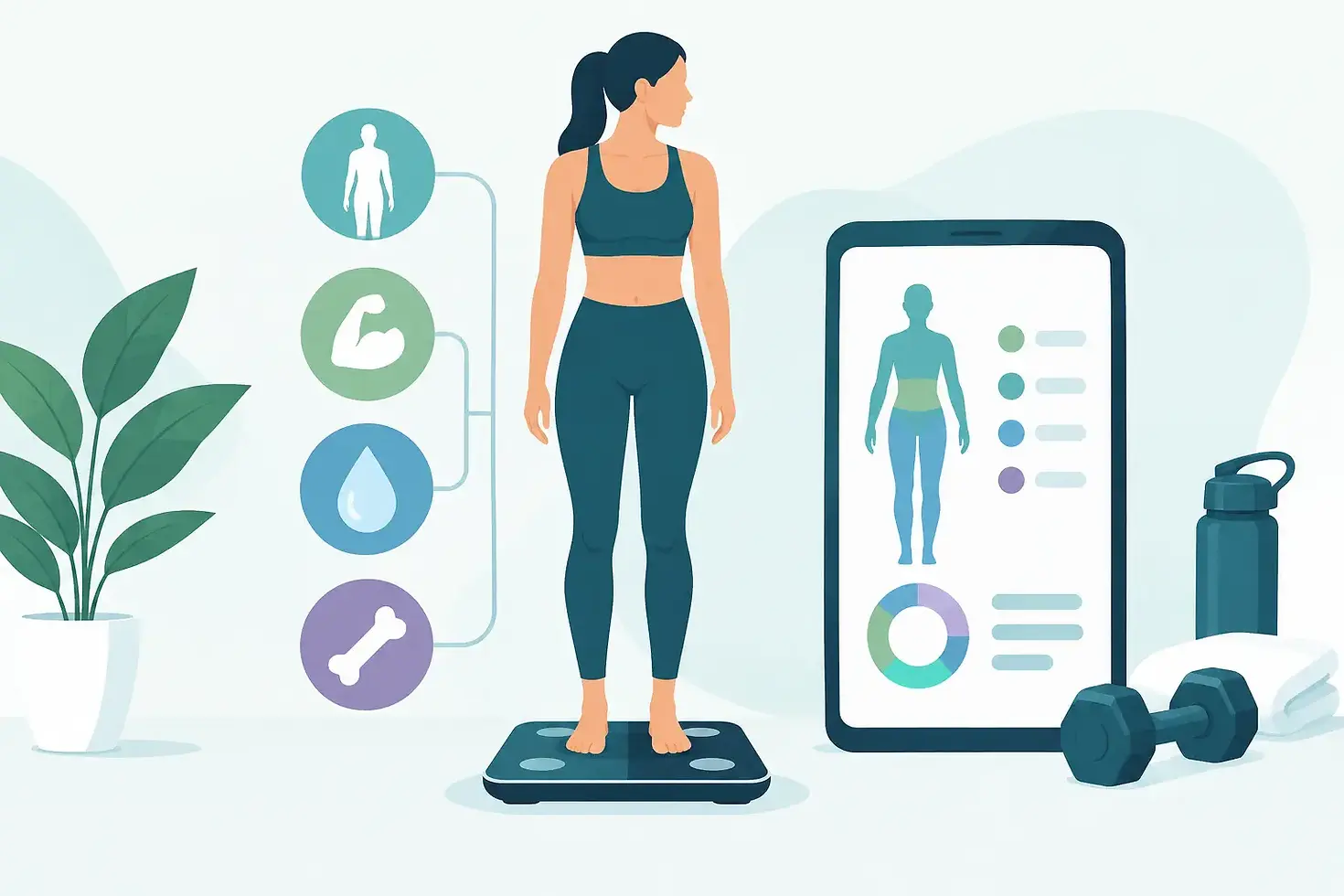
Body composition separates total body weight into meaningful compartments. In practical performance terms, the primary question is how much of your weight is fat mass versus fat-free mass. Fat-free mass includes skeletal muscle, water, glycogen, bone, organs, and other non-fat tissue. It is not a direct synonym for muscle.
That distinction matters during a cut. A rapid drop in scale weight can reflect reduced gut content, depleted glycogen, and water loss long before it reflects substantial fat loss. Conversely, a hard training block, higher carbohydrate intake, creatine use, inflammation, or poor sleep can raise scale weight without adding body fat.
Track the variables that help you interpret the whole picture: body weight, circumference measurements, progress photos, performance markers, and an estimated body-fat percentage from one consistent method. No single metric is perfect. Together, they expose the trend.
How to Track Body Composition Without Chasing Noise
The strongest protocol is one you can execute under the same conditions every week. Precision comes from controlling variables, not from buying the most expensive device in the room.
Start with daily body weight averages
Weigh yourself each morning after using the bathroom and before food, fluids, training, or clothing. Use the same scale on the same hard surface. Record the number daily, then calculate a seven-day average.
Do not react to one weigh-in. Sodium intake, late meals, travel, stress, menstrual-cycle shifts, and hard leg training can all move the scale significantly. Compare this week's average with the prior week's average. That is the signal.
For many fat-loss phases, a weekly loss of roughly 0.25% to 1.0% of body weight may be appropriate, depending on starting body fat, training age, timeline, recovery capacity, and whether lean-mass retention is the priority. Leaner athletes usually need a slower rate. The more aggressive the deficit, the greater the risk that performance and lean tissue will suffer.
Take circumference measurements every one to two weeks
A tape measure is low-tech, inexpensive, and highly valuable when used correctly. Measure at the same time of day, ideally under the same conditions as your weigh-in. Stand relaxed. Do not flex, pull the tape tight, or chase a smaller number.
For most physique goals, measure the waist at the navel and at the narrowest point if those locations differ. Add hips, chest, upper arm, thigh, and calf measurements when your training goal demands more detail. Record the exact anatomical location so the next measurement is truly comparable.
A shrinking waist with stable body weight can indicate recomposition. A stable waist with falling body weight may suggest you are losing water, glycogen, or tissue without producing the fat-loss result you want. Context creates the answer.
Use photos as objective evidence
Photos reveal changes that mirrors often hide. Take front, side, and back images every two to four weeks, using the same location, lighting, camera distance, time of day, and posing. Wear the same clothing or use standardized posing attire.
Natural lighting can work well, but consistency matters more than flattering light. A dramatic overhead light may make one check-in look sharper than the next and distort your perception of progress. Your goal is comparability, not a highlight reel.
If you are in a bodybuilding prep or a highly structured recomp phase, include relaxed and flexed poses. Relaxed photos show baseline changes in waist control and fat distribution. Flexed photos help you monitor muscular fullness, symmetry, and whether the plan is preserving the look you are training for.
Choose one body-fat assessment method and stay with it
Body-fat readings are estimates. Their greatest value is trend tracking, not claiming that a device has identified your exact percentage to the decimal point.
Bioelectrical impedance scales are convenient and useful for directional data, but hydration status can change the result. If you use one, test under identical conditions: morning, fasted, after the bathroom, and before training. Do not compare a reading taken after a high-carb refeed to one taken after a dehydrating travel day.
Skinfold calipers can be highly useful when performed by a skilled, consistent technician. The method is operator-dependent, so switching practitioners can create false changes. DEXA scans offer more detail and can be useful at major checkpoints, but they also vary with hydration, machine calibration, positioning, and testing protocol. Treat DEXA as a periodic audit, not a weekly command center.
For most serious trainees, daily scale averages, waist measurements, and standardized photos provide more actionable information than frequent scans. Add a professional assessment when you need a deeper checkpoint, not because you need another number to obsess over.
Add Performance and Recovery Markers
Your body composition plan should not separate aesthetics from performance. If your weight and waist are dropping but your strength is collapsing, sleep is deteriorating, resting heart rate is climbing, and training motivation is gone, the protocol may be extracting too high a price.
Track a small set of training markers that matter to your goal. This could include top-set load and repetitions on key compound lifts, weekly volume tolerance, sprint output, conditioning pace, or recovery between sessions. Record sleep duration, subjective recovery, hunger, digestion, and energy on a simple one-to-five scale.
These metrics help distinguish an effective calorie deficit from an under-recovered system. A temporary performance dip can occur during a cut, especially near the end of a demanding phase. A sustained decline across multiple weeks calls for an adjustment in calories, training volume, recovery practices, or the pace of loss.
Build a Weekly Data Review
Data only becomes valuable when it directs a decision. Set one recurring weekly review, ideally on the same day each week. Look at the seven-day weight average, waist trend, photos, training performance, adherence, and recovery together.
Ask a direct question: Is the current plan producing the intended outcome at an acceptable recovery cost? If the answer is yes, hold steady. Do not change calories or cardio because of a single fluctuation.
If progress has stalled for at least two consistent weeks and adherence has been verified, make one controlled adjustment. Reduce calories modestly, increase daily movement, or add a measured amount of conditioning. Avoid changing every variable at once. When you alter food intake, cardio, supplements, training volume, and meal timing simultaneously, you lose the ability to identify what worked.
The same discipline applies when progress is too fast. If waist measurements are falling rapidly while strength, fullness, and recovery decline, slowing the rate of loss may better protect lean mass. The exact path to progress is rarely the most aggressive one.
Common Tracking Errors That Distort Results
The biggest mistake is using inconsistent conditions. A Friday-night restaurant meal, Saturday afternoon body scan, and Sunday morning photo check do not create a reliable baseline. Standardize the process before interpreting the outcome.
Another error is treating wearable calorie estimates as exact. They can support activity awareness, but they should not overrule your real-world trend data. Your weekly averages, measurements, adherence, and performance response are more useful than a device's estimate of calories burned.
Finally, do not confuse a protocol with its outcome. Advanced nutrition strategies, recovery interventions, and clinician-supervised metabolic treatments may support a body-composition goal, but none replace measurement discipline. If you cannot quantify intake, training, recovery, and results, you cannot accurately evaluate the plan.
The Precision Standard
Body composition tracking is an accountability system. It protects you from emotional decisions after a salty meal, a flat workout, or one unflattering photo. It also prevents false confidence when scale loss looks impressive but your waist, strength, and physique tell a different story.
Run your measurements with the same seriousness you bring to your training log. Give the data enough time to reveal a pattern, then make one deliberate adjustment. Physical evolution responds to precision, patience, and the willingness to follow evidence rather than impulse.


Comments