Coordinating Peptide Protocols: Professional Guide

The failure of a complex recovery protocol rarely stems from the chemical compound itself, but rather from the collapse of the logistical infrastructure supporting it. In a field where physiological precision is the baseline, the margin for error in handling and documentation is non-existent. You likely recognize that even the most advanced strategy is rendered useless if the chain of custody, temperature stability, or administrative framework fails at a critical juncture. Achieving institutional-grade results requires a shift in focus toward rigorous peptide protocol coordination. This isn't merely a matter of scheduling; it's a disciplined commitment to technical oversight and methodological integrity.
You understand the high stakes involved in elite physical performance, where uncertainty regarding compound stability or fragmented logistics can compromise months of progress. This guide promises to equip you with a repeatable coordination framework designed to minimize logistical risk and implement professional documentation standards. We'll analyze the specific mechanics of maintaining protocol integrity, from transport logistics to the structured data entry required for long-term monitoring. By the end of this guide, you'll possess the tools to transform a fragmented process into a precise, high-stakes operational system that leaves nothing to chance.
Table of Contents
The Architecture of Professional Peptide Protocol Coordination
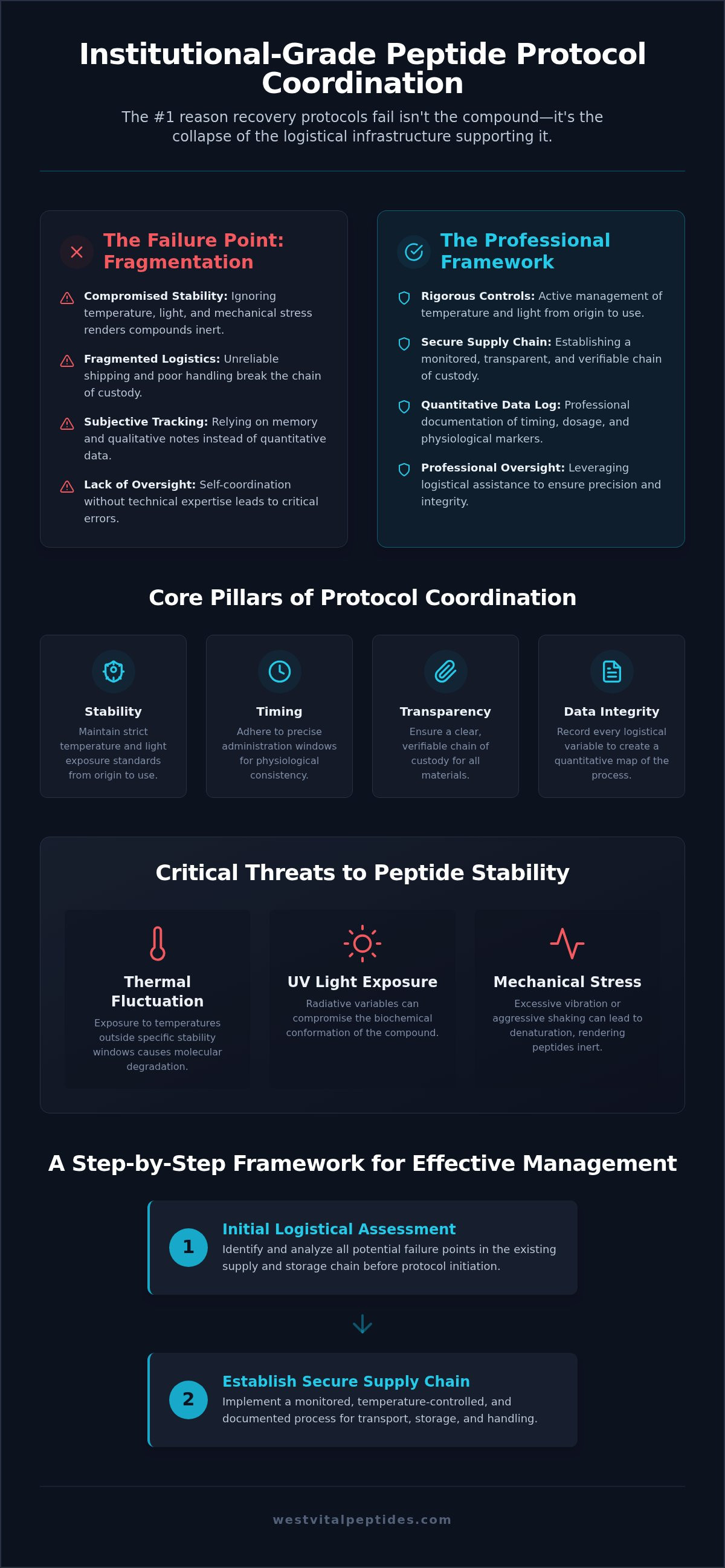
Successful recovery strategies depend on more than just the selection of a compound. They require a rigorous architecture of peptide protocol coordination, which is the systematic management of timing, logistics, and documentation. While a medical prescription identifies a specific substance, a coordination framework manages the environment in which that substance exists. Fragmentation is the primary failure point in professional recovery. When logistics are treated as an afterthought, the physiological outcome is compromised. A structured system ensures that the technical requirements of the protocol are met with the same intensity as the physical training itself.
To understand the necessity of this structure, one must first grasp what peptide therapeutics are and why their biochemical nature demands environmental stability. The core pillars of coordination include:
Stability: Maintaining strict temperature and light exposure standards from the point of origin to the point of use.
Timing: Adhering to precise administration windows to maintain physiological consistency.
Transparency: Ensuring a clear, verifiable chain of custody for all materials.
Data Integrity: Recording every logistical variable to create a quantitative map of the recovery process.
The Role of Professional Oversight
Self-coordination often results in logistical errors that compromise compound stability. Users who lack a structured framework frequently fail to account for the technical nuances of transport and storage. Transitioning from "guessing" to a methodological approach requires a disciplined mentor who understands physiology and body mechanics. Professional advice provides the necessary oversight to navigate complex logistics, moving the process from a casual routine to an institutional-grade operation. This expertise ensures that nothing is left to chance during the coordination phase.
Coordination vs. Implementation
A plan's effectiveness is limited by the logistics supporting it. Coordination acts as the critical bridge between scientific theory and physical results. While implementation is the act of following the protocol, coordination is the administrative infrastructure that makes implementation possible. West Vital Peptides LLC provides the logistical assistance necessary to manage this administrative burden. This support allows the elite performer to focus on recovery while maintaining a baseline of precision. Professional recovery consulting prioritizes the integrity of the process, ensuring that the logistical framework is as robust as the recovery goals it supports.
Establishing Technical Requirements for Protocol Integrity
Technical integrity in peptide protocol coordination isn't a theoretical preference; it's a physiological necessity. The molecular structure of these compounds makes them exceptionally vulnerable to environmental stressors. If the logistical chain fails to account for thermal fluctuations or light exposure, the protocol's efficacy is compromised before it even begins. Professional-grade coordination requires a shift from passive receiving to active technical verification of every variable in the supply chain. It's about ensuring the compound delivered is the compound intended for use.
Peptide Stability and Environmental Factors
Molecular degradation occurs when peptides are exposed to temperatures outside their specific stability windows. This sensitivity is a core component of the regulatory challenges for peptide therapeutics, as maintaining the exact biochemical conformation is difficult during transit. Red flags in handling include excessive vibration, exposure to UV light, or transit delays that exceed the capacity of thermal packaging. Mechanical stress, such as aggressive shaking, can lead to denaturation, rendering the compound inert. In the context of 2026 logistical standards, peptide stability is defined as the absolute preservation of molecular architecture through the rigorous control of thermal, kinetic, and radiative variables from the point of synthesis to the point of administration.
Secure Logistics and Supply Chain Integrity
Standard shipping methods rarely provide the level of oversight required for professional protocols. Relying on basic courier services without specialized coordination often leads to unmonitored temperature spikes. Effective peptide logistics management bridges this gap by implementing tracked, temperature-controlled transit routes. This methodological framework ensures that the chain of custody remains unbroken and verifiable. When selecting a logistical partner, elite performers look for transparency, data-driven tracking, and a deep understanding of recovery requirements. If you're managing complex recovery goals, seeking professional advice on logistical infrastructure can prevent costly errors. Technical verification at each stage confirms that the compound's integrity matches the rigorous standards of professional peptide protocol coordination.
Methodological Documentation: Moving Beyond Subjective Tracking
The transition from a casual routine to professional peptide protocol coordination requires the absolute abandonment of subjective tracking. Relying on "feeling" as a primary metric is a fundamental error that compromises the integrity of any recovery strategy. Precision demands quantitative data points that remain consistent over time. By establishing a rigorous administrative framework, you transform a series of actions into a verifiable historical record. This documentation serves as the primary tool for evaluating the effectiveness of the logistical chain and the physiological response to the protocol.
Institutional standards for record-keeping mirror the intensity of clinical review. Even regulatory bodies, such as those providing FDA Guidance on Peptide Drug Products, emphasize the necessity of structured data to understand pharmacological interactions and performance. A professional coordination log must include specific data fields: exact timing relative to circadian rhythms, precise dosage measurements, and objective physiological markers. Maintaining this level of transparency in the advisory-client relationship ensures that every adjustment to the protocol is based on evidence rather than anecdote.
Key Markers for Professional Recovery Logs
Professional documentation focuses on physiological feedback loops and body mechanics rather than vague wellness claims. You must integrate objective metrics, such as sleep efficiency scores or heart rate variability, into the daily routine to create a complete picture of recovery. This data-driven worldview is the foundation of the precision recovery management framework. By recording how the body responds to specific logistical variables, you allow for a more nuanced evolution of the strategy. Metrics don't lie; they provide the clarity needed to maintain long-term protocol integrity.
Avoiding Common Documentation Errors
Inconsistent logging creates "data gaps" that render professional advice ineffective. If a logistical variable isn't recorded, it doesn't exist for the purposes of analysis. Poor documentation leads to flawed conclusions, as the advisor cannot distinguish between a physiological plateau and a logistical failure. You must standardize nomenclature to ensure clarity in every report. Using precise units of measurement and clear terminology prevents ambiguity. A disciplined approach to documentation ensures that the historical record remains an asset rather than a liability, providing the transparency required for elite physical performance.
A Step-by-Step Framework for Effective Protocol Management
Operational excellence is the only acceptable standard when managing elite recovery. A theoretical plan lacks value without a rigorous execution framework. Effective peptide protocol coordination requires a linear, five-step progression that eliminates ambiguity and ensures physiological precision. This methodology moves from initial assessment to ongoing professional review, creating a closed-loop system where nothing is left to chance.
Step 1: Initial Logistical Assessment. You must evaluate the storage environment, required administrative tools, and protocol design to identify potential failure points before the first administration.
Step 2: Secure Supply Chain Establishment. Coordinate transit schedules and handling procedures to ensure compound integrity remains unbroken during the transfer of materials.
Step 3: Documentation Implementation. Deploy the daily tracking system for dosages, timing, and objective physiological markers to maintain a quantitative record.
Step 4: Weekly Logistical Audits. Conduct internal reviews of timing adherence and stability logs to detect and correct minor deviations before they compound.
Step 5: Monthly Methodological Review. Engage in a comprehensive data analysis with a professional advisor to refine the strategy based on documented performance.
Phase 1: Preparation and Logistics Setup
Preparation is a technical discipline. You must secure all necessary support materials, such as thermal monitoring equipment and precision administrative tools, before the protocol commences. Setting up the physical environment requires establishing a dedicated, temperature-controlled area that protects compounds from light and kinetic stress. Defining a clear communication rhythm with your advisory team is essential; it ensures that logistical adjustments are made in real-time. For those seeking institutional-grade support, West Vital Peptides offers the logistical assistance required to establish this foundational infrastructure.
Phase 2: Execution and Continuous Oversight
Execution demands stoic adherence to the established methodology. Managing the "how-to" of daily timing requires a commitment to consistency that mirrors the intensity of elite training. When logistical disruptions occur, such as travel or shipping delays, the framework provides the troubleshooting protocols necessary to maintain stability. You don't guess when a delay happens; you follow the contingency plan. This level of continuous oversight prevents the fragmentation that often compromises self-managed protocols. It's the difference between a casual attempt and a professional standard of recovery.
Strategic Advisory and Logistical Support for Elite Recovery
Elite physical performance demands more than the acquisition of materials; it requires the absolute mastery of the systems that manage them. While retail environments focus on the transactional sale of products, professional wellness consulting prioritizes the structural integrity of the recovery process. You recognize that the logistical burden of managing stability, timing, and documentation is a significant barrier to success. West Vital Peptides operates as a methodological partner, assuming the technical oversight necessary to maintain protocol precision. This partnership moves beyond the limitations of pharmaceutical retail, offering a disciplined framework for those who value data over trends.
Transitioning from a transactional mindset to a methodological partnership is essential for long-term physiological success. Professional peptide protocol coordination transforms these substances from mere commodities into precision-engineered tools within a broader recovery strategy. When you engage in a professional inquiry for logistical assistance, you aren't simply seeking advice; you're securing the infrastructure of your recovery. This level of oversight ensures that every administrative action is aligned with your high-stakes performance goals, leaving no room for the errors inherent in self-managed protocols.
The West Vital Peptides Methodology
The foundation of our approach is rooted in the expertise of Coach West, a specialist in physiology and body mechanics. By leveraging this deep understanding of physical systems, we design coordination frameworks that respect the nuances of biological recovery. Our commitment to transparency and rigorous logistical standards ensures that every variable is monitored with institutional-grade precision. We prioritize physiological recovery strategies that are built on a data-driven worldview. This methodology demands a high level of dedication, as we focus on the integrity of the process to achieve elite results.
Next Steps for Professional Coordination
Identifying the vulnerabilities in your current protocol is the first step toward institutional-grade recovery. You should evaluate your logistical gaps, such as inconsistent documentation or potential stability risks during transit, to determine where your strategy is most likely to fail. Seeking expert guidance before initiating complex wellness protocols is not a sign of uncertainty but a hallmark of professional discipline. It's the standard practice of elite performers who understand that precision is the only path to excellence. To secure the integrity of your protocol, you must implement a system that prioritizes technical oversight and methodological documentation. Contact West Vital Peptides to initiate a professional inquiry and establish the logistical assistance required for your recovery goals.
Securing the Integrity of Your Recovery Protocol
Professional recovery requires a transition from passive participation to active technical oversight. You've seen how logistical fragmentation and subjective tracking serve as the primary failure points in high-stakes performance strategies. By implementing a structured framework for peptide protocol coordination, you ensure that every variable, from temperature stability to administration timing, remains within precise parameters. This methodological discipline is what distinguishes elite recovery from casual experimentation. Precision isn't an option; it's the requirement.
Success in this field depends on a partnership built on transparency and scientific authority. West Vital Peptides provides the expert guidance necessary to navigate these complexities. With a deep foundation in physiology and mechanics, we offer nationwide logistical support and a rigorous methodological approach to protocol integrity. Don't leave your physical results to chance or unmonitored supply chains. It's time to elevate your standards and request professional logistical assistance from West Vital Peptides. Commit to a process that prioritizes data, and your body will reflect that dedication.
Frequently Asked Questions
What is peptide protocol coordination and why is it necessary?
Peptide protocol coordination is the administrative discipline of managing the timing, environmental stability, and documentation required for a recovery strategy. It's necessary because the molecular integrity of these compounds is highly sensitive to external variables. Without a structured coordination framework, the gap between a planned protocol and actual physical results widens due to logistical fragmentation. This systematic approach ensures that every variable is controlled to maintain physiological precision.
How do I ensure peptide stability during the coordination process?
Ensuring stability requires the absolute preservation of a compound’s molecular architecture through rigorous environmental control. You must maintain specific temperature windows and prevent exposure to ultraviolet light or excessive kinetic stress during transit and storage. Utilizing thermal monitoring equipment and specialized packaging is non-negotiable for professional-grade protocols. These technical requirements prevent the denaturation that occurs when compounds are handled through standard, unmonitored shipping methods.
Can I coordinate a complex protocol without professional logistical support?
While an individual can attempt self-coordination, it significantly increases the risk of logistical failure and compromised compound integrity. Professional logistical support provides the technical oversight and administrative infrastructure needed to manage complex transit and documentation requirements. Experts identify potential vulnerabilities in the supply chain that the average user might overlook. Relying on professional assistance ensures that the protocol remains a disciplined methodology rather than an unmonitored routine.
What are the most common mistakes in peptide protocol coordination?
The most frequent errors in peptide protocol coordination include subjective tracking based on "feeling" and inconsistent administration timing. Many users also fail to account for the cumulative impact of minor thermal fluctuations during storage. These data gaps make it impossible to evaluate the strategy's true efficacy. Standardizing your documentation and adhering to a strict handling schedule are essential steps to avoid these common administrative failures in recovery management.
How does documentation improve the effectiveness of a wellness protocol?
Documentation transforms a series of isolated actions into a verifiable historical record that allows for data-driven adjustments. By recording precise dosages, timing, and objective markers, you create a quantitative map of your body’s response to the protocol. This level of transparency removes the ambiguity of anecdotal observations. It ensures that any modifications to the strategy are based on documented performance rather than subjective speculation or fleeting trends.
What role does a professional advisor play in protocol logistics?
A professional advisor acts as a disciplined mentor who manages the technical logistics and administrative burden of a recovery strategy. They provide the expertise in physiology and mechanics necessary to design a robust coordination framework. This oversight ensures that the chain of custody remains unbroken and that the documentation standards meet institutional requirements. The advisor’s role is to protect the integrity of the process, allowing the performer to focus on physical execution.
How do I manage protocol coordination while traveling?
Managing travel requires portable, high-specification thermal storage and a commitment to maintaining your established documentation rhythm regardless of location. You must plan transit routes that minimize exposure to unmonitored environments and ensure that administrative tools are accessible. Travel doesn't excuse a lapse in methodology; it demands a higher level of logistical discipline. Maintaining the same rigorous standards on the road is critical for preserving the long-term integrity of the protocol.
What technical markers should I track for professional recovery management?
Professional recovery management focuses on objective physiological feedback loops rather than qualitative wellness claims. You should track markers such as heart rate variability (HRV), sleep efficiency scores, and specific performance metrics alongside your administration logs. Integrating these data points into a structured daily routine provides a complete picture of your recovery status. This quantitative approach allows for the precise refinement of the protocol based on how your body mechanics respond over time.


Comments