Avoiding Common Peptide Protocol Mistakes: A Methodological Framework for Recovery Integrity

A 2020 review in JAMA Internal Medicine revealed that many compounded and grey-market materials contain significantly less active ingredient than labeled, or in some cases, none at all. While the landscape of recovery is shifting toward greater regulation, as evidenced by the July 2026 FDA Pharmacy Compounding Advisory Committee recommendations for substances like BPC-157 and TB-500, the prevalence of common peptide protocol mistakes remains a significant barrier to achieving predictable results. You likely recognize that achieving elite physical performance requires more than just access to sophisticated materials; it demands a disciplined adherence to a structured methodology. Precision is the only path to consistency.
This article provides a rigorous methodological framework designed to identify and mitigate the technical, logistical, and procedural errors that compromise professional recovery protocols. We'll examine the critical importance of cold-chain standards and the necessity of using validated diluents like bacteriostatic water to prevent microbial growth. By establishing a structured verification process, you can ensure material integrity and minimize the logistical risks that often undermine even the most well-conceived strategies. This discussion moves from foundational principles to specific logistical actions to ensure your recovery remains data-driven and transparent.
Table of Contents
Systemic Failures in the Peptide Sourcing Landscape
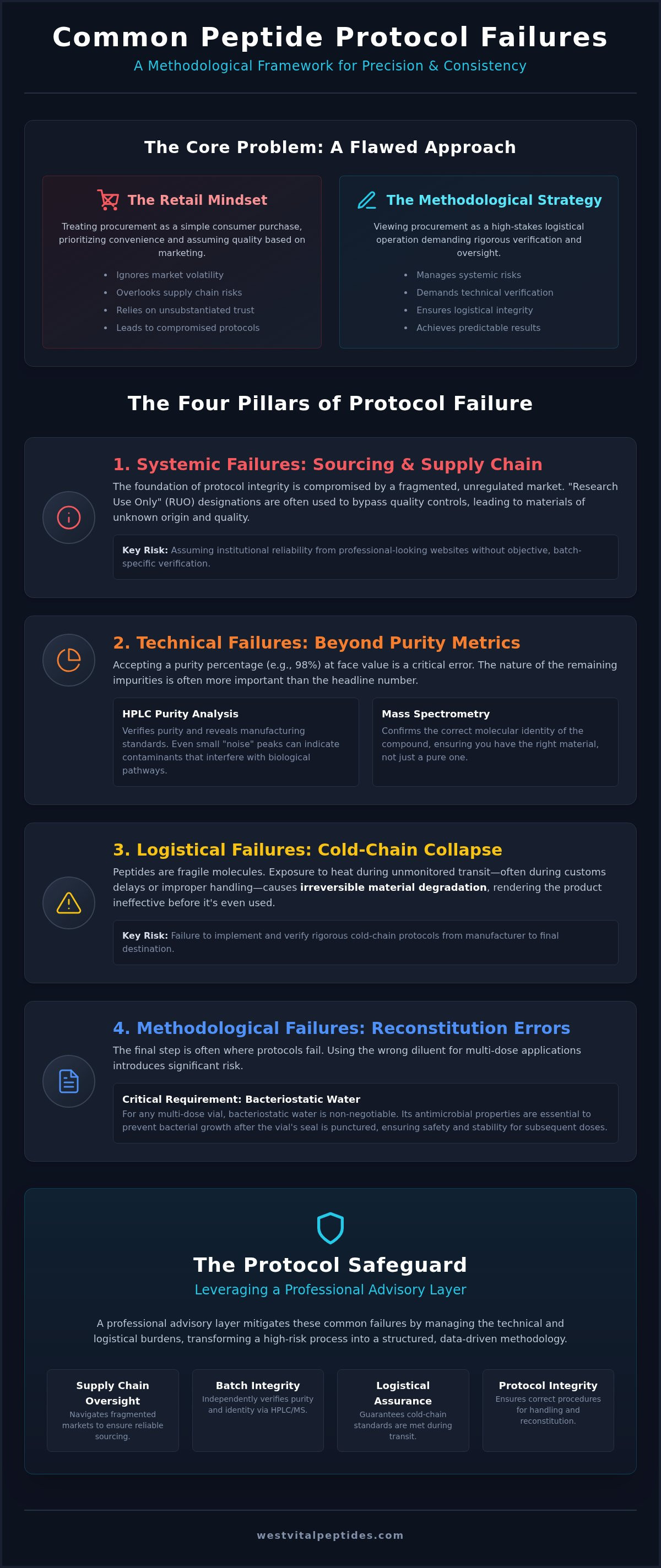
The professional landscape of recovery is currently marred by a fundamental misunderstanding of procurement. Many individuals approach the acquisition of materials as a standard consumer transaction, similar to purchasing supplements or fitness equipment. This retail mindset is one of the most significant common peptide protocol mistakes because it ignores the inherent volatility of unregulated markets. When procurement is treated as a simple purchase rather than a high-stakes logistical operation, the integrity of the entire protocol is compromised from the outset.
Achieving precision in recovery requires an understanding of the chemical foundations of the materials being utilized. Peptide Synthesis is an intricate laboratory process where even minor fluctuations in temperature, reagent purity, or reaction time can lead to a degraded final product. In a fragmented market, these technical failures are often obscured by professional-looking websites that lack actual institutional transparency. Sourcing errors don't exist in isolation; they compound as the protocol progresses, leading to unpredictable outcomes and wasted resources.
The Institutional vs. Retail Dichotomy
Institutional reliability is built on batch-specific verification rather than marketing-driven trust signals or aesthetic branding. A "one-click" purchasing model prioritizes convenience over the rigorous methodological oversight required for recovery integrity. This creates a dangerous gap where the user assumes pharmaceutical-grade standards are being met, while the supplier is operating under "Research Use Only" (RUO) designations to bypass traditional quality controls. Professionals recognize that trust is not a data point. Methodological oversight requires a transition from passive consumption to active verification of every material batch.
Navigating Fragmented Supply Chains
International sourcing introduces logistical variables that most retail models are ill-equipped to manage. Customs delays, improper storage in transit, and a lack of temperature monitoring represent systemic failures that directly impact material stability. These common peptide protocol mistakes often stem from a lack of supply-chain visibility. Establishing a baseline for methodological procurement involves more than finding a vendor; it requires a comprehensive strategy for logistical assistance. Professional advisory services, such as specialized peptide wellness consulting, provide the necessary oversight to navigate these fragmented supply chains. By shifting the focus from retail availability to institutional reliability, professionals can mitigate the risks inherent in modern procurement landscapes.
Technical Verification: Beyond Basic Purity Metrics
Technical verification is the process of using High-Performance Liquid Chromatography (HPLC) and Mass Spectrometry to confirm batch integrity before a protocol begins. In professional circles, a 98% purity rating is viewed as a minimum threshold rather than a gold standard. One of the common peptide protocol mistakes is accepting a high purity percentage without investigating the remaining 2% of unknown impurities. These contaminants can interfere with biological pathways or cause localized irritation. True verification requires a granular look at the data behind the number.
HPLC Purity: Decoding the Chromatogram
HPLC measures the purity of a substance by separating its components based on specific chemical properties. The resulting chromatogram displays a primary peak representing the target material; however, the "noise" or smaller peaks in the data reveal the manufacturing standards of the laboratory. Integrating this raw lab data into a broader precision recovery management framework allows for a nuanced assessment of material quality. Without this analysis, you risk batch inconsistency in unverified supply chains. It's a failure of methodology to assume that all batches from a single source maintain identical standards.
Mass Spectrometry and Molecular Identity
While HPLC confirms purity, Mass Spectrometry confirms identity. It ensures the exact amino acid sequence required for the protocol is present in the vial. Mislabeled materials are a persistent risk in the research marketplace, where one peptide may be substituted for another due to logistical errors at the manufacturing level. Elite performance demands that third-party verification remains non-negotiable. If you're unsure about interpreting these technical reports, seeking professional advisory assistance can bridge the gap between raw data and protocol safety.
Precision dosing also depends on understanding net peptide content. This metric accounts for the actual weight of the peptide molecules versus the weight of salts and water. A 5mg vial might only contain 4.2mg of active peptide. Ignoring this calculation leads to systematic underdosing and is a failure of technical verification. Professional scrutiny is required to identify outdated or "faked" Certificates of Analysis (COAs). These documents are often recycled across different batches or digitally altered to mislead the end user. Failing to account for these technical nuances results in common peptide protocol mistakes that can derail months of disciplined effort.
Logistical Integrity: Handling and Cold Chain Failures
Lyophilization, the technical process of freeze-drying, is the industry standard for maintaining the molecular stability of sensitive sequences. By removing moisture through sublimation, laboratories create a stable "cake" that resists hydrolysis and chemical degradation. However, this state of suspended stability is not an absolute shield against environmental stressors. One of the most frequent common peptide protocol mistakes is the assumption that lyophilized materials are indestructible. In reality, these molecules remain highly sensitive to thermal fluctuations, light exposure, and mechanical stress throughout their lifecycle.
Establishing a rigorous cold chain from the laboratory to the protocol environment is a mandatory requirement for maintaining material integrity. When temperature thresholds are exceeded during transit, the resulting thermal energy can cause irreversible degradation of the peptide bonds. This damage is often invisible to the naked eye, leading to protocols that fail despite appearing technically sound. Precision requires a methodological approach to every logistical touchpoint.
The Criticality of Secure Shipping
Maintaining research integrity depends heavily on the execution of secure peptide shipping logistics. Professionals don't leave transit to chance; they evaluate couriers based on their capacity for handling temperature-sensitive materials. By 2026, FedEx cold-chain standards have established specific benchmarks for the transport of sensitive biological materials, requiring specialized packaging and real-time monitoring. Utilizing professional logistics minimizes the risk of transit-related degradation, ensuring that the materials arriving at your facility match the purity levels recorded at the point of manufacture.
Methodological Handling and Storage
Once materials reach their destination, storage protocols must reflect the intended duration of use. Optimal temperature ranges are strictly defined:
Long-term stability: Requires consistent temperatures between -20°C and -80°C to halt all molecular motion.
Short-term use: Materials may be maintained at 2°C to 8°C, provided they are protected from light and moisture.
Professional storage environments utilize vacuum sealing and desiccants to prevent moisture ingress, which can trigger degradation even in a lyophilized state. Mechanical agitation, such as vigorous shaking, is another of the common peptide protocol mistakes that can compromise success. These delicate sequences can denature when subjected to excessive physical force. A disciplined protocol treats every vial with the same precision used in a clinical laboratory setting, prioritizing stability over convenience.
Methodological Execution: Reconstitution and Timing Errors
Reconstitution represents the transition from logistical preparation to procedural execution. It's a technical process that requires a controlled environment to maintain sterility and material stability. One of the most critical common peptide protocol mistakes involves the selection of a diluent. As of 2026, the standard for multi-use reconstitution is bacteriostatic water containing 0.9% benzyl alcohol. Using sterile or distilled water for multi-dose vials is a systemic failure; these solvents lack the antimicrobial properties necessary to prevent bacterial growth after the initial puncture. Professional protocols demand strict adherence to these technical specifications to preserve recovery integrity.
Precision in Reconstitution
Maintaining a sterile environment is not optional. Every surface, vial stopper, and tool must be sanitized to prevent the introduction of contaminants that can degrade the peptide sequence or cause adverse local reactions. Dosage accuracy also depends on the precise calculation of net peptide content relative to the volume of the solvent. A common error in protocol management is reconstituting an excessive number of vials simultaneously. Once a peptide is in a liquid state, its rate of degradation increases significantly compared to its lyophilized form. A disciplined approach involves reconstituting only what is required for the immediate schedule. If you require assistance in establishing these technical standards, professional advisory services can provide the necessary oversight to ensure protocol accuracy.
Data-Driven Protocol Tracking
Effective recovery management relies on objective data rather than subjective feeling. Establishing a comprehensive baseline before initiating a protocol is a mandatory step in the methodological framework. This includes documenting physiological markers and performance metrics that serve as a reference point for future evaluation. Common peptide protocol mistakes often stem from a lack of rigorous documentation, making it impossible to distinguish between genuine progress and anecdotal observations.
A structured tracking methodology allows for the identification of "stall points," where the physiological response no longer aligns with the established goals. Without a data-driven record, you cannot make informed adjustments to the protocol. Methodological verification requires a commitment to detail that mirrors the precision used in professional athletics and clinical research. By treating documentation as a core component of the protocol, you eliminate the ambiguity that often leads to failure in less disciplined environments. Consistency in timing is equally vital, as irregular application can disrupt the physiological feedback loops the protocol is designed to support.
The Professional Advisory Layer as a Protocol Safeguard
The fragmentation of the modern sourcing landscape creates a significant barrier for those who prioritize precision in their recovery. Relying on a DIY approach often leads to the common peptide protocol mistakes identified in previous sections, such as technical verification failures or cold-chain breaches. Transitioning to a model of peptide wellness consulting shifts the technical and logistical burden from the individual to a specialized advisor. This layer of professional oversight acts as a safeguard, ensuring that the integrity of the protocol is maintained from procurement through execution.
Outsourcing Logistical Complexity
High-stakes professionals don't leave their recovery to chance. They recognize that managing international supply chains and verifying batch-specific data requires a level of institutional knowledge that goes beyond retail-level research. Specialized logistical assistance ensures that every touchpoint in the supply chain supports the ultimate recovery goal. This includes the rigorous evaluation of couriers and the enforcement of 2026 FedEx cold-chain standards for temperature-sensitive materials. By outsourcing these complexities, you minimize transit-related degradation and ensure that your materials meet the elite standards required for institutional reliability. Institutional knowledge is the only effective hedge against a fragmented market.
Structuring Your Recovery Strategy
Initiating a professional advisory relationship provides a structured framework for protocol oversight. This process begins with establishing a professional wellness methodology that prioritizes data and physiological integrity over marketing trends. Led by Coach West, a specialist in physiology and body mechanics, this guidance ensures that every action is rooted in a data-driven worldview. The long-term benefits of disciplined peptide logistics management include a minimized risk profile and a more predictable path toward your recovery objectives. Methodology replaces guesswork with precision.
A rigorous strategy leaves nothing to chance. It demands a level of dedication that mirrors the intensity of elite physical performance. By integrating professional advisory into your framework, you address the systemic failures that lead to common peptide protocol mistakes. This methodological approach transforms recovery from a series of impulsive actions into a disciplined, transparent, and highly organized process. The focus remains on the "how" and the "why," ensuring that protocol execution aligns with the highest standards of excellence. Professional guidance is not a luxury; it's a requirement for those who value the integrity of their physiological goals.
Establishing Methodological Sovereignty in Recovery
Maintaining the integrity of a professional recovery protocol requires a definitive transition from passive consumption to active methodological oversight. By implementing rigorous technical verification standards and enforcing strict cold-chain logistics, you effectively mitigate the common peptide protocol mistakes that frequently compromise physiological outcomes. Precision is not merely a preference; it's the foundational requirement for consistency in elite physical performance. Achieving this level of accuracy demands a commitment to data and a rejection of the convenience offered by fragmented retail markets.
Our specialized advisory, led by Coach West, provides a comprehensive framework for elite performance recovery by prioritizing logistical integrity and supply chain management. This disciplined approach ensures that every variable, from molecular identity to transit temperature, aligns with institutional standards. We invite you to Inquire about our Professional Wellness Consulting and Logistical Support to secure the sovereignty of your recovery strategy. With a rigorous methodology in place, your dedication will yield the precise results your ambitions demand.
Frequently Asked Questions
How do I verify the authenticity of a peptide Certificate of Analysis?
Authenticity is verified by cross-referencing the batch number with the testing laboratory's internal database. Genuine Certificates of Analysis (COAs) include a verifiable QR code or a direct contact for the certifying chemist. One of the common peptide protocol mistakes is accepting a digital document without independent confirmation. You must ensure the date of analysis aligns with the batch production schedule rather than being a recycled report from a previous year.
What is the difference between HPLC and Mass Spectrometry in peptide testing?
HPLC determines the purity level by separating chemical components, while Mass Spectrometry identifies the specific molecular weight and amino acid sequence. HPLC reveals how much of the substance is the target molecule, but it doesn't confirm if the molecule is actually the intended peptide. Mass Spectrometry is the only way to verify molecular identity. Professional protocols require both tests to ensure the material is both pure and correctly identified.
Why is 98% purity considered the minimum standard for professional protocols?
A 98% threshold ensures that the concentration of unknown impurities remains below a level that could trigger adverse physiological responses or interfere with protocol efficacy. Remaining impurities can include residual solvents, reagents, or truncated sequences from the synthesis process. In high-stakes environments, anything less than 98% introduces unacceptable variables. Methodological integrity demands that these contaminants are minimized to prevent unpredictable interactions within the recovery framework.
Can temperature fluctuations during shipping permanently damage peptide stability?
Excessive thermal energy causes irreversible denaturation of the delicate peptide bonds, rendering the material biologically inactive. While lyophilization provides some resistance, it doesn't offer absolute protection against extreme heat during transit. Adhering to 2026 FedEx cold-chain standards is essential for maintaining stability. Once the secondary or tertiary structure of the molecule is compromised by heat, it can't be restored, leading to a complete failure of the intended protocol.
What are the most common red flags when evaluating a peptide supplier?
Red flags include a lack of batch-specific testing data, the absence of temperature-controlled shipping options, and vague disclaimers without technical transparency. Suppliers who prioritize marketing hype over data-driven methodology often hide systemic failures in their procurement process. If a vendor can't provide a verifiable chain of custody or refuses to disclose their technical verification standards, they represent a significant risk to your recovery integrity and professional standards.
How does professional logistical assistance differ from buying peptides online?
Professional logistical assistance involves active oversight of the entire supply chain, whereas online buying is a passive retail transaction. Logistical partners manage cold-chain compliance, technical verification, and material handling to prevent common peptide protocol mistakes. They act as a specialized consultant to ensure that the materials arriving for use meet institutional standards. This transitions the process from a risky, unverified purchase to a disciplined, methodological procurement strategy.
Is lyophilization enough to ensure peptide stability at room temperature?
Lyophilization significantly improves stability but doesn't allow for indefinite storage at room temperature. Moisture ingress and light exposure can still trigger degradation even in a freeze-dried state. For long-term preservation, professional standards require maintaining materials between -20°C and -80°C. Room temperature exposure should be limited to the shortest duration possible during the reconstitution process. Vacuum sealing and desiccant use are mandatory safeguards to maintain the integrity of the material.
Why should elite practitioners prioritize professional advisory over DIY sourcing?
Elite practitioners prioritize professional advisory because it removes the technical and logistical burden of supply chain management. Specialized consultants like Coach West provide the physiological and methodological guidance necessary to navigate fragmented markets. This oversight ensures that every protocol is rooted in data rather than anecdotal trends. Professional advisory shifts the focus from simple procurement to a comprehensive recovery framework, ensuring that the integrity of the process remains uncompromised by logistical failures.


Comments